Multani Mitti for Hair: Scalp Detox, Dandruff & Oil Control Guide
Published 12 July 2026
Why Multani Mitti works on the scalp
The scalp is skin — with its own sebaceous glands, its own microbiome and its own tendency to build up oil, sweat and product residue. Multani Mitti's absorbent, mineral-rich clay does the same thing on the scalp that it does on the face: it lifts excess sebum and gently exfoliates dead cells, without the harsh sulphates in most anti-dandruff shampoos.
That gentleness matters. Aggressive shampoos strip the acid mantle, and a stripped scalp responds by producing more oil and more flakes — the exact loop most dandruff sufferers get stuck in.
Multani Mitti — Pure Fuller's Earth Clay
Brightening clay face pack · 100g
Benefits of Multani Mitti for hair and scalp
Controls oily roots between washes
A weekly Multani Mitti scalp mask can push wash days from every second day to every fourth day for most people.
Reduces flaking and itch
The clay absorbs the oil that Malassezia yeast feeds on, which is the underlying trigger of most adult dandruff.
Removes product and hard-water buildup
Silicones, styling residue and mineral buildup all sit on the scalp and dull the hair. Multani Mitti clears them without the harshness of a clarifying shampoo.
Adds root lift and shine
Cleaner roots mean lift at the crown, and hair that reflects light more evenly along the length.
The scalp detox mask — Multani Mitti + Neem
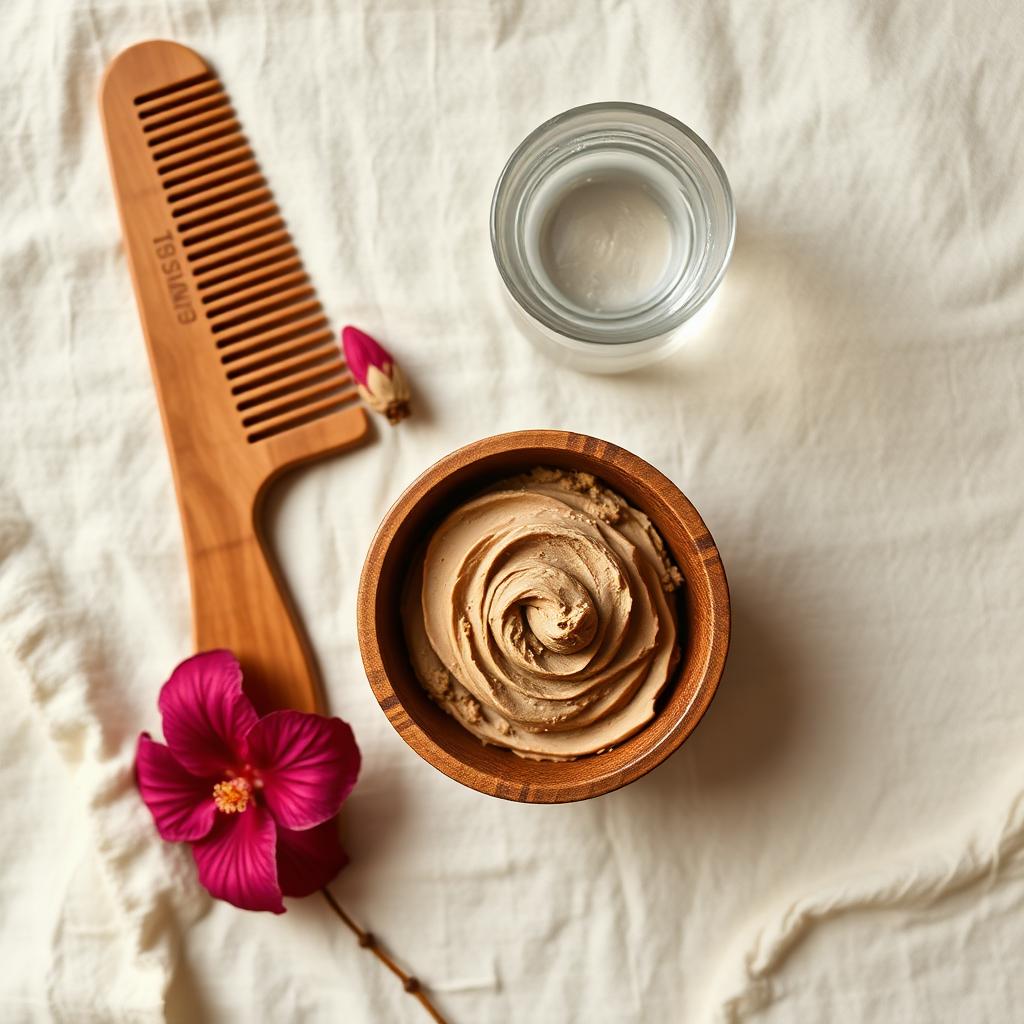
3 tablespoons Multani Mitti + 1 teaspoon Growterra Neem Powder + enough rose water or cooled green tea to make a thick, spreadable paste (roughly 4–5 tablespoons). The neem is naturally antibacterial and targets the Malassezia yeast behind most dandruff, while the clay handles the oil.
Section damp hair and apply the paste directly onto the scalp with your fingertips — not the lengths. Massage gently for 30 seconds, leave on for 15–20 minutes, then rinse and shampoo as usual. Once a week for oily scalps, once every 10 days for combination scalps.
The oil-control mask — Multani Mitti + Apple Cider Vinegar
For scalps that turn oily within 24 hours of washing: 3 tablespoons Multani Mitti + 1 tablespoon raw apple cider vinegar + 4 tablespoons cool filtered water. The ACV rebalances scalp pH after the clay has absorbed the excess oil, leaving the scalp cleaner for longer.
Apply to scalp only, leave for 12–15 minutes, rinse and shampoo. Follow with conditioner on the lengths — never on the scalp.
The gentle mask for dry lengths — Multani Mitti + Curd + Honey
If your roots are oily but the lengths are dry, apply this blend to the scalp only: 3 tablespoons Multani Mitti + 2 tablespoons fresh curd + 1 teaspoon raw honey + water to loosen. Curd's lactic acid is a mild scalp exfoliant, and honey's humectants stop the mask from drying too fast.
How often to use Multani Mitti on hair
Very oily scalps: once a week. Combination scalps: once every 10–14 days. Dry scalps: once every 3 weeks, and only the honey-and-curd version. Always apply to the scalp, not the lengths — clay left on mid-lengths and ends will absorb the natural oils that keep hair soft.
Mistakes to avoid
Applying clay to dry hair (it locks in and won't rinse cleanly). Leaving the mask on until it fully cracks (dehydrates the scalp). Using metal bowls or utensils. Skipping conditioner on the lengths afterwards. Doing a Multani Mitti mask the same week as another clarifying treatment.
Multani Mitti scalp detox mask for oily roots and dandruff
A weekly at-home scalp treatment using Growterra Multani Mitti and Neem Powder to lift excess oil, reduce flaking and reset an itchy scalp.
- 1
Mix the paste
In a non-metal bowl, combine 3 tbsp Multani Mitti, 1 tsp neem powder and 4–5 tbsp rose water into a thick, spreadable paste.
- 2
Section damp hair
Lightly mist hair with water and part it into four sections. The scalp should be damp, the lengths just slightly.
- 3
Apply to scalp only
Using your fingertips, apply the paste along each parting line, working it into the scalp. Do not coat the lengths.
- 4
Leave and rest
Cover with a shower cap if you like and leave on for 15–20 minutes. Do not let it dry to a crack.
- 5
Rinse and wash
Rinse thoroughly with lukewarm water, then shampoo once with a gentle, sulphate-free cleanser. Condition the lengths only.
Multani Mitti — Pure Fuller's Earth Clay
Brightening clay face pack · 100g
Shop now →Shop the storyNeem Powder — 100% Pure Organic Neem Leaf
For clear skin & scalp care · 100g
Shop now →Frequently asked questions
Is Multani Mitti good for hair?+
Yes — especially for oily scalps, dandruff and product buildup. Used as a weekly scalp-only mask, it absorbs excess sebum and lifts flakes without the harshness of clarifying shampoos.
Does Multani Mitti stop hair fall?+
Indirectly. It doesn't act on the hair follicle, but a clean, balanced scalp is the foundation of stronger regrowth. Pair the mask with a gentle wash routine and daily scalp massage for best results.
How often can I use Multani Mitti on my scalp?+
Oily scalps: once a week. Combination: every 10–14 days. Dry scalps: once every 3 weeks and only with curd and honey added.
Can I apply Multani Mitti on the length of my hair?+
No — keep the mask on the scalp only. Clay left on mid-lengths and ends absorbs the natural oils that keep hair soft, and can leave the lengths dry and brittle.
Which is better for dandruff — Multani Mitti or shikakai?+
They work together. Multani Mitti + Neem lifts the oil and yeast behind dandruff; shikakai is a gentle, sulphate-free wash for the days in between. Alternate them across the week.
Will Multani Mitti make my hair dry?+
Only if you apply it to the lengths, let it dry to a crack, or skip conditioner afterwards. Apply to the scalp only, rinse before it cracks, and always condition mid-length to ends.
Slow wellness, in your inbox
Get The 7-Day Botanical Reset — free wellness guide — plus monthly rituals, recipes and quiet product notes. No spam, unsubscribe any time.